

Gospel of Thomas Saying 29: Spirit and Body
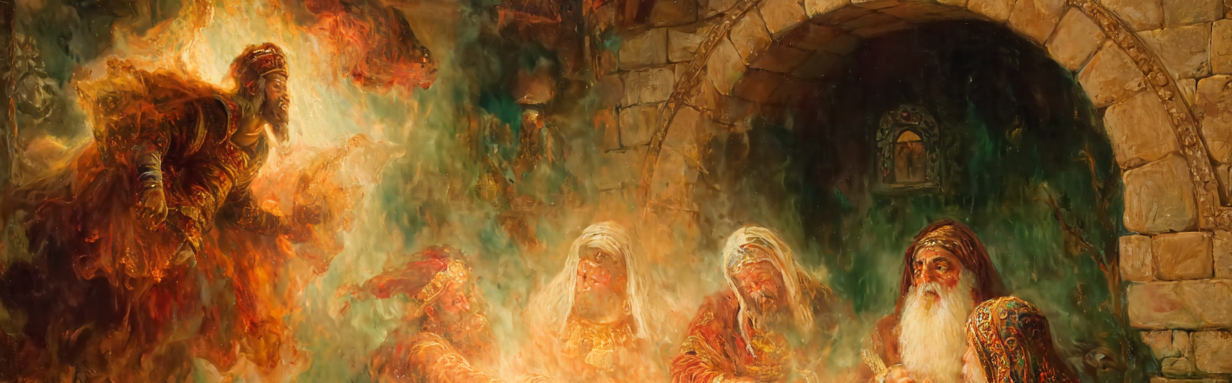
Jesus said, "If the flesh came into existence because of spirit, that's amazing. If spirit came into existence because of the body, that's really amazing! But I'm amazed at how [such] great wealth has been placed in this poverty."
AD
3/8/20262 min read
Gospel of Thomas Saying 29: Spirit and Body
Jesus said, "If the flesh came into existence because of spirit, that's amazing. If spirit came into existence because of the body, that's really amazing! But I'm amazed at how [such] great wealth has been placed in this poverty."
1. The Paradox of Origin
Jesus presents two hypothetical scenarios to highlight the strangeness of human existence, and notably, he doesn't dismiss either one. He grades them.
"If the flesh came into existence because of spirit..." This is the more familiar theological direction: the divine creates the material, spirit gives rise to flesh. Jesus calls this amazing, and means it. Even the conventional miracle deserves genuine awe. The word translated "amazing" carries real wonder, not mere acknowledgment.
"If spirit came into existence because of the body..." This is called really amazing, and that elevation is significant. Standard Gnostic thought would reject this scenario outright: how could the infinite arise from the finite? How could the eternal be born from what decays? Yet Jesus doesn't dismiss it. He holds it open as the more astonishing possibility, that embodiment itself could generate or awaken spirit. This is where the saying most quietly challenges Gnostic orthodoxy. The tension is deliberate.
2. "Wealth in Poverty"
The culminating line is the heart of the saying: "But I'm amazed at how such great wealth has been placed in this poverty."
Great Wealth refers to the Divine Spark, the eternal spirit, the light, the living connection to the divine source.
Poverty refers to the human body and the material world, fragile, hungry, subject to decay and death. In Gnostic thought, the physical world is "impoverished" precisely because it is defined by lack, limitation, and finality.
But notice the word placed. The wealth was not accidentally trapped here. It was put here. This is not a cosmic mistake to be escaped, it is a mystery to be recognized.
3. The Core Message
The saying's deepest register is existential awe. Jesus expresses wonder at the fact that the vast, eternal, and "wealthy" Spirit is not merely residing within the human vessel like a tenant in a poor house, it is the body's deepest nature. Soul and body are not two things awkwardly sharing space. They are a single, inexplicable, paradoxical reality.
This points toward two inseparable truths:
Humanity is a walking contradiction. We are clay and cosmos simultaneously, poverty and wealth woven into one existence.
Recognition is the task. The goal is anamnesis, awakening, remembrance, the moment you recognize the wealth already present inside your own poverty. The body is not an obstacle to overcome on the way to the divine. It is the very location where the divine waits to be found.
Jesus's amazement is itself part of the teaching. The one who knows is still struck with wonder. That wonder, at your own impossible existence, is the beginning of understanding.
info@churchofwambo.org
© SDBEST LLC, 2025. All rights reserved.